
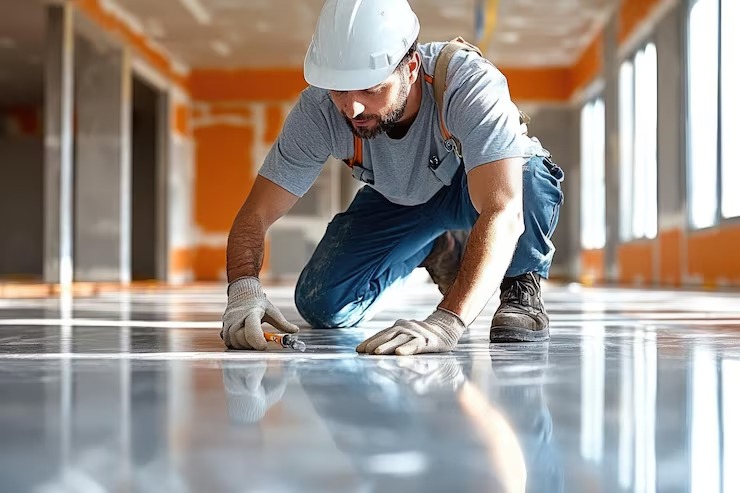
If your facility floor is cracking, dusting, or failing under daily traffic, you need more than a quick patch job. You need an experienced epoxy flooring contractor in Edison, NJ who understands what commercial and industrial floors actually go through. That is exactly the gap High Performance Systems has been filling since 1988.
Honestly, most business owners do not think about flooring until it becomes a problem. A cracked slab, a slippery surface, or a floor that cannot handle heavy equipment eventually turns into lost productivity and safety risk. What’s interesting is how often these issues could have been avoided with the right flooring system from the start.
What Makes an Epoxy Flooring Contractor Different From a General Contractor?
A general contractor might know how to pour concrete, but flooring for commercial kitchens, food processing plants, and industrial facilities requires specialized knowledge. If your search for a reliable epoxy flooring contractor Edison, NJ keeps turning up contractors who mainly handle residential driveways, that mismatch alone should raise a flag before you sign anything.
This focus matters. In fact, the company does not take on residential projects at all. That specialization means every project, whether it’s a restaurant kitchen or a food processing facility, gets handled by a team that has seen thousands of similar floors and knows exactly how they fail and how to prevent it.
Which Industries Actually Need This Kind of Flooring?
The demand for professional epoxy flooring spans several types of businesses, and each one has slightly different needs. Restaurants need something that survives grease and constant washing. Food processing plants need a surface that meets strict hygiene standards. Warehouses need something that survives forklift traffic without cracking apart.
- Restaurants and commercial kitchens
- Food manufacturing and processing plants
- Industrial food production facilities
- Warehouses and distribution centers
- Any business requiring food safe, high performance flooring
Each of these environments puts unique stress on flooring. As a result, a one size fits all approach simply does not hold up over time, which is why customization based on facility type has always been part of the process.
How Does the Installation Process Actually Work?
Getting a durable epoxy floor is not as simple as pouring a coating over old concrete. The process starts with mechanical surface preparation, typically through heavy diamond grinding, which removes weak surface layers, old sealers, and contaminants. This step alone determines whether the final floor bonds properly or fails within a year.
Once the surface reaches the correct profile, cracks and joints get addressed individually. Skipping this step is one of the most common reasons floors fail early. A high strength epoxy patching mortar handles cracks, while control joints often receive a semi rigid polyurea filler so heavy loads transfer smoothly without chipping the joint edges.
After the substrate is properly prepared, a hundred percent solids epoxy primer gets applied. This penetrates the open concrete pores, seals the surface, and prevents moisture vapor from interfering with the coats that follow. Then comes the body coat, a high build epoxy layer that forms the seamless, nonporous surface businesses actually need for cleanliness and durability.
For facilities that need extra traction, anti slip aggregates get broadcast directly into the wet body coat. This creates a texture that meets OSHA and ADA slip resistance requirements without making the floor harder to clean. It’s a small step that makes a significant difference in daily safety, especially in kitchens and processing areas where spills are constant.
Why Does the Topcoat Matter So Much?
The topcoat is the layer that takes the most abuse day after day. A durable polyurethane or aliphatic topcoat resists chemical spills, abrasion, and impact while also improving light reflection across the space. Some completed industrial projects have seen ambient lighting improve by as much as thirty percent simply due to the reflective finish.
What Results Can a Facility Actually Expect?
Businesses considering this kind of investment often want to know what they are really getting. The honest answer is measurable performance. Properly installed systems have supported loads exceeding ten thousand pounds without delamination or gouging, which matters enormously for facilities running forklifts, carts, or heavy equipment daily.
Dust elimination is another major benefit that often gets overlooked until after installation. Untreated concrete sheds fine particles constantly, which affects HVAC systems, food quality, and even employee respiratory comfort. A properly sealed epoxy surface eliminates this issue almost entirely, keeping the space cleaner with far less maintenance effort required from staff.
Turnaround time also plays a critical role for businesses that cannot afford extended downtime. Many projects are scheduled around weekends or planned closures, and fast curing systems allow facilities to return to full operation within twenty four to forty eight hours after installation, depending on square footage and the extent of repairs needed beforehand.
Because of this specialization, business owners searching for a dependable epoxy flooring contractor NJ often find that working with a team focused solely on commercial and industrial spaces produces better long term results than hiring a contractor that splits time across residential and commercial jobs alike.
Final Thoughts
Choosing the right flooring partner is not just about appearance. It’s about safety, hygiene, and how well your facility performs under real operational stress. A properly installed epoxy system pays for itself through reduced downtime, fewer repairs, and a safer working environment for everyone on the floor.
Businesses that treat flooring as an afterthought often end up paying more later, whether through repeated repairs or unexpected closures. Working with an experienced team from the start tends to be the more practical and cost effective route in the long run for any facility.
FAQs
Does this contractor handle residential flooring projects?
No. The company works exclusively with commercial and industrial clients and does not take on residential jobs of any kind.
How long has this company been installing epoxy flooring?
High Performance Systems has been a certified epoxy flooring contractor since 1988, giving it decades of hands on experience.
How quickly can a facility reopen after installation?
Depending on the scope of work, most facilities can return to full operation within twenty four to forty eight hours after the final coat is applied.